

Metrics
Define each business number once, verify it, and let every question use it.
Metrics are named business measures with one agreed way to count them. The AI and every question use them first, so a number means the same thing everywhere.
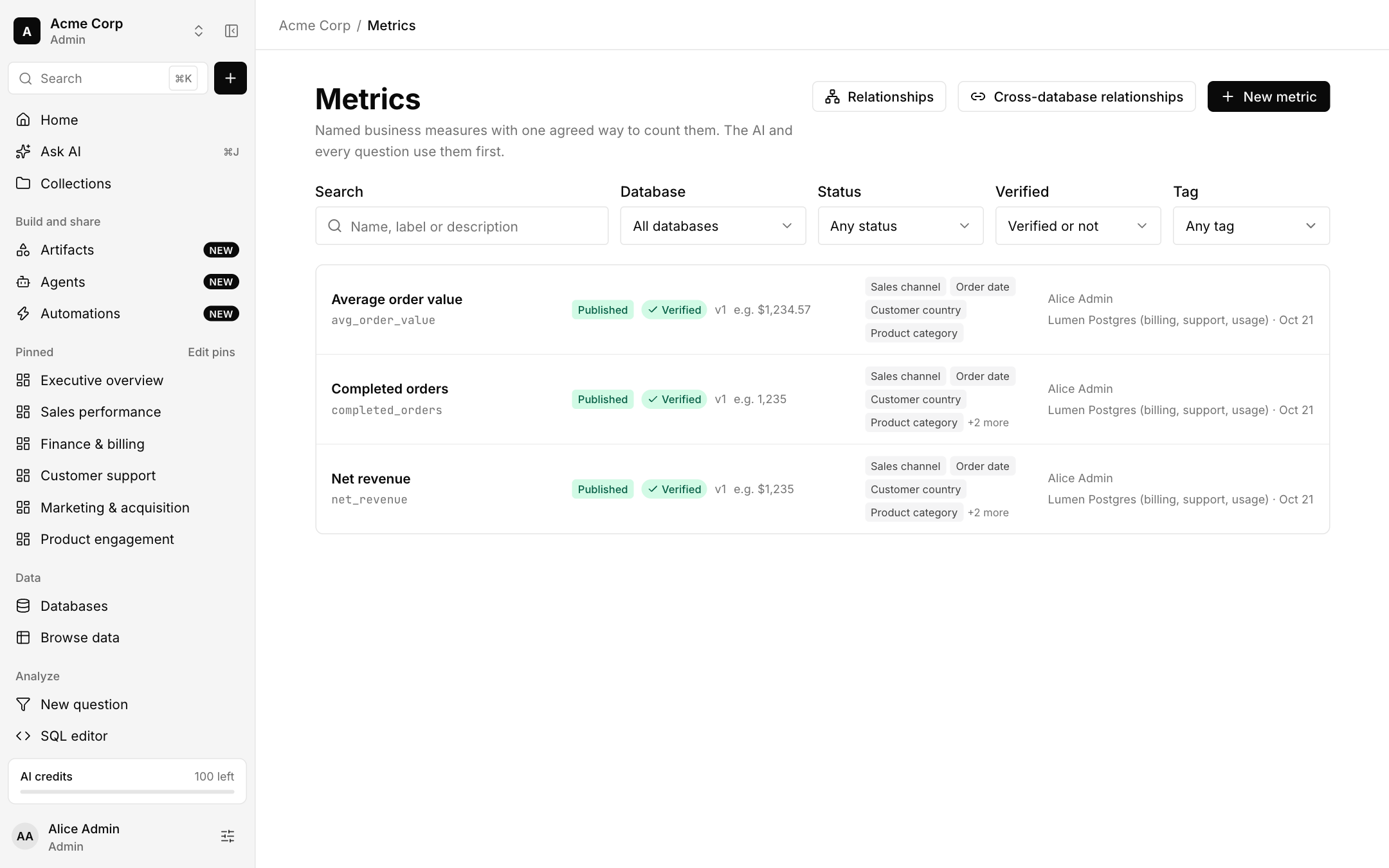
What a metric is
A metric has a name, a definition, dimensions you can slice it by, and a format. A simple metric aggregates a column with filters and a time column. A ratio metric divides two published simple metrics, worked out for each group.
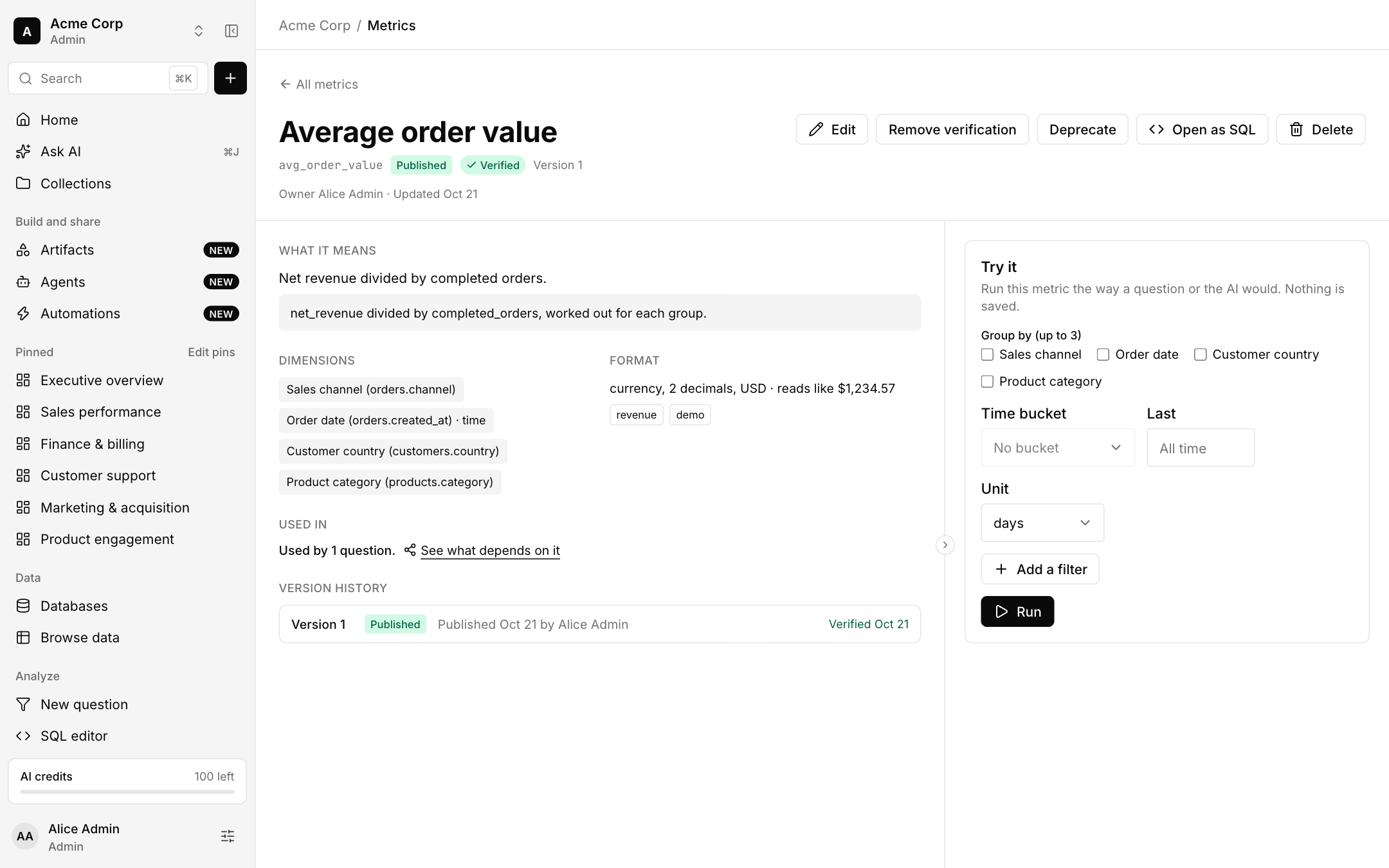
Life cycle
- Draft: only you see it, and the AI never uses drafts.
- Published: creates an immutable version.
- Verified: a human-set flag that says someone checked the current definition. Any edit clears it.
- Deprecated: kept for history, no longer suggested.
A metric cannot be deleted while a question or dashboard depends on it.
Create and edit
Choose New metric, or use Metric ideas in Ask AI to propose one from your data.
Pick the database, table and aggregation, add filters and choose dimensions along your relationships.
Use Check it to try it, then publish and verify.
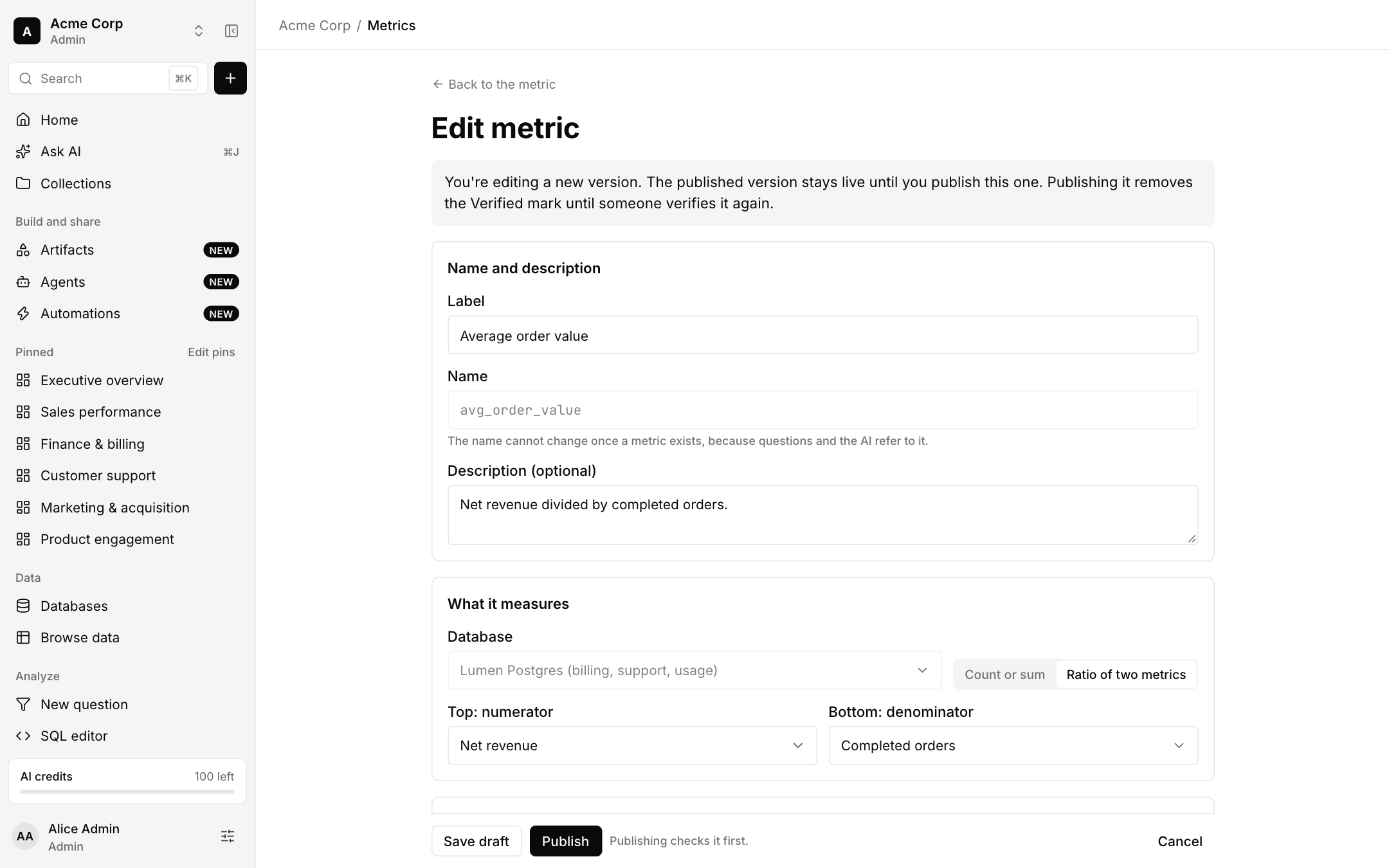
Model as code
Export a connection's model as YAML, review a diff and import it back. You can also import dbt MetricFlow metrics: simple and ratio metrics are imported and the rest are reported as skipped. Imports never verify or delete anything.
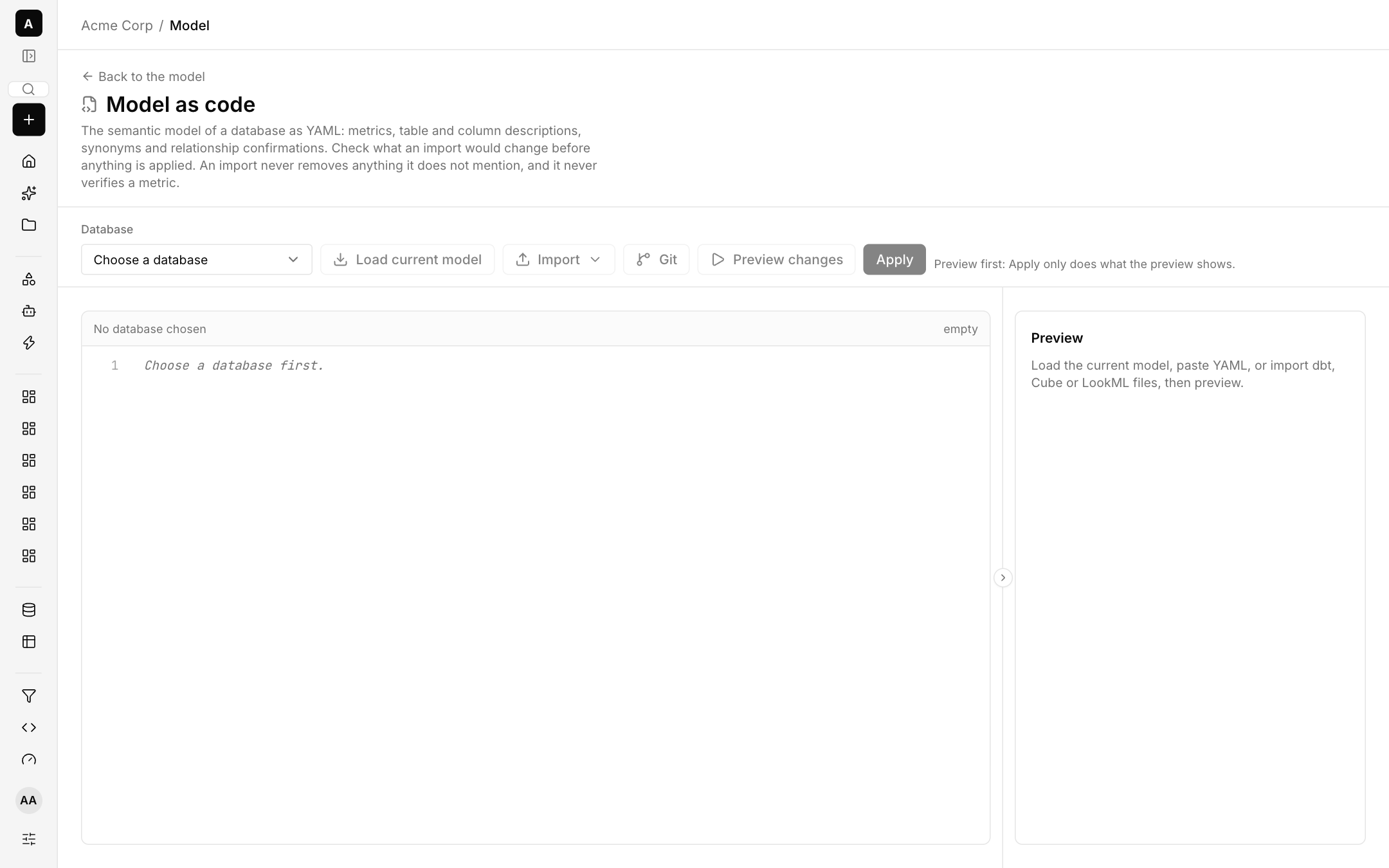
How the AI uses metrics
Ask AI prefers a published, verified metric and labels the answer Verified metric, Metric, not yet verified or Ad hoc SQL. A metric answer needs the Native SQL access level.